24/7 Detention Hotline / Loved one detained by ICE? We schedule bond hearings, file habeas, bring them home. Call (718) 484‑7510 →
A detained immigrant behind bars at dawn
Detention Response Unit · Bond Hearings · Habeas Petitions · Stay of Removal · Usher Law Group, P.C. · EST. 2013

Every hour they're held
is an hour we can change.

ICE detains in the predawn dark. Bond does not wait until business hours. We locate, litigate, and advocate for your loved ones at Bond Proceedings before the Immigration Court and when EOIR fails, we file federal habeas. Liberty is on the other end of one phone call.

The Firm
Two decades of immigration practice. One fight: getting families home.
0+ Years combined immigration experience
0 States, plus Puerto Rico, Guam & territories
0+ Clients we've fought for & reunited
0× More likely to prevail with counsel*

*Roughly 9 in 10 people held in ICE detention go without a lawyer. Studies by the Vera Institute and TRAC find that detainees with counsel are up to 10× more likely to obtain relief than the unrepresented.

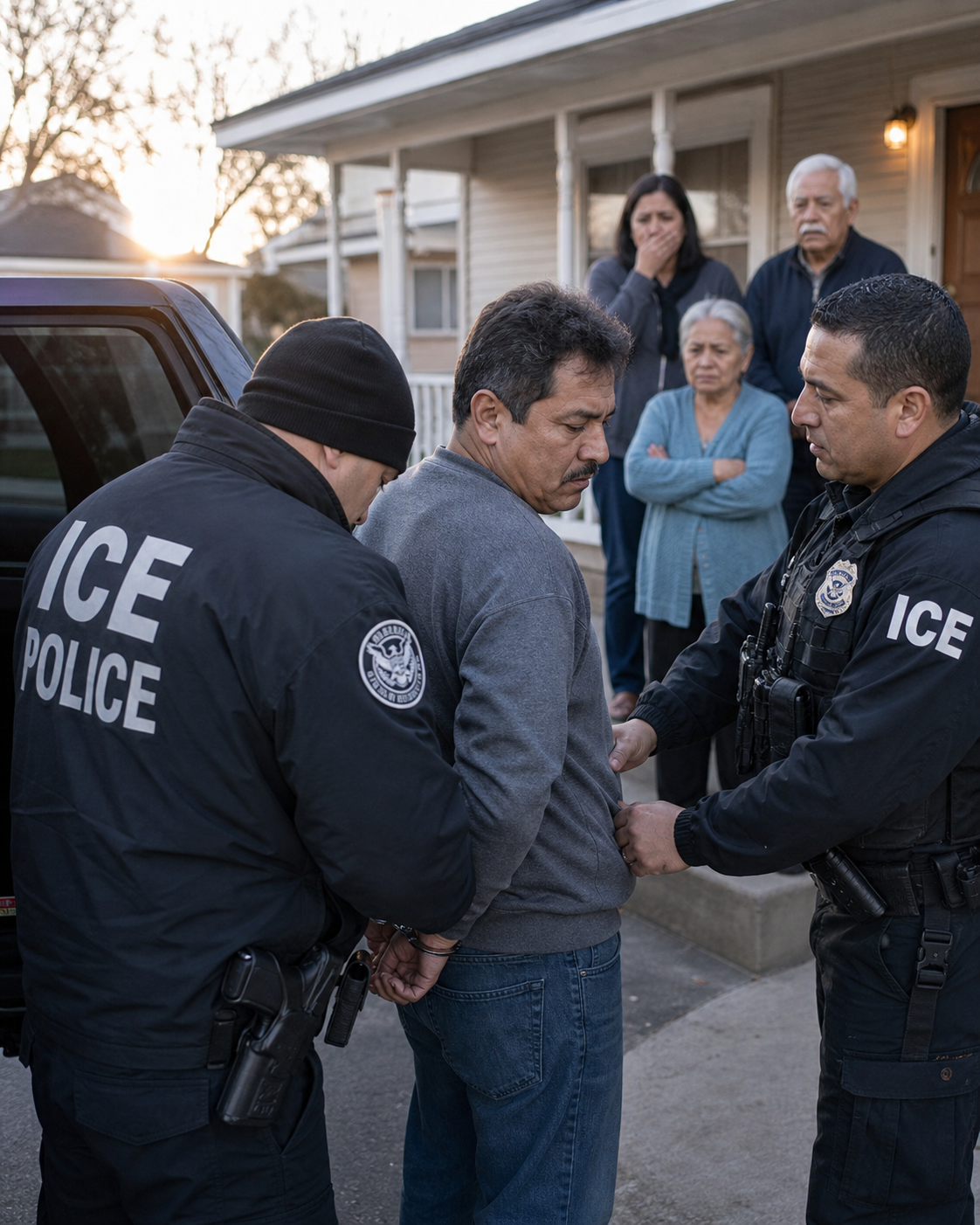
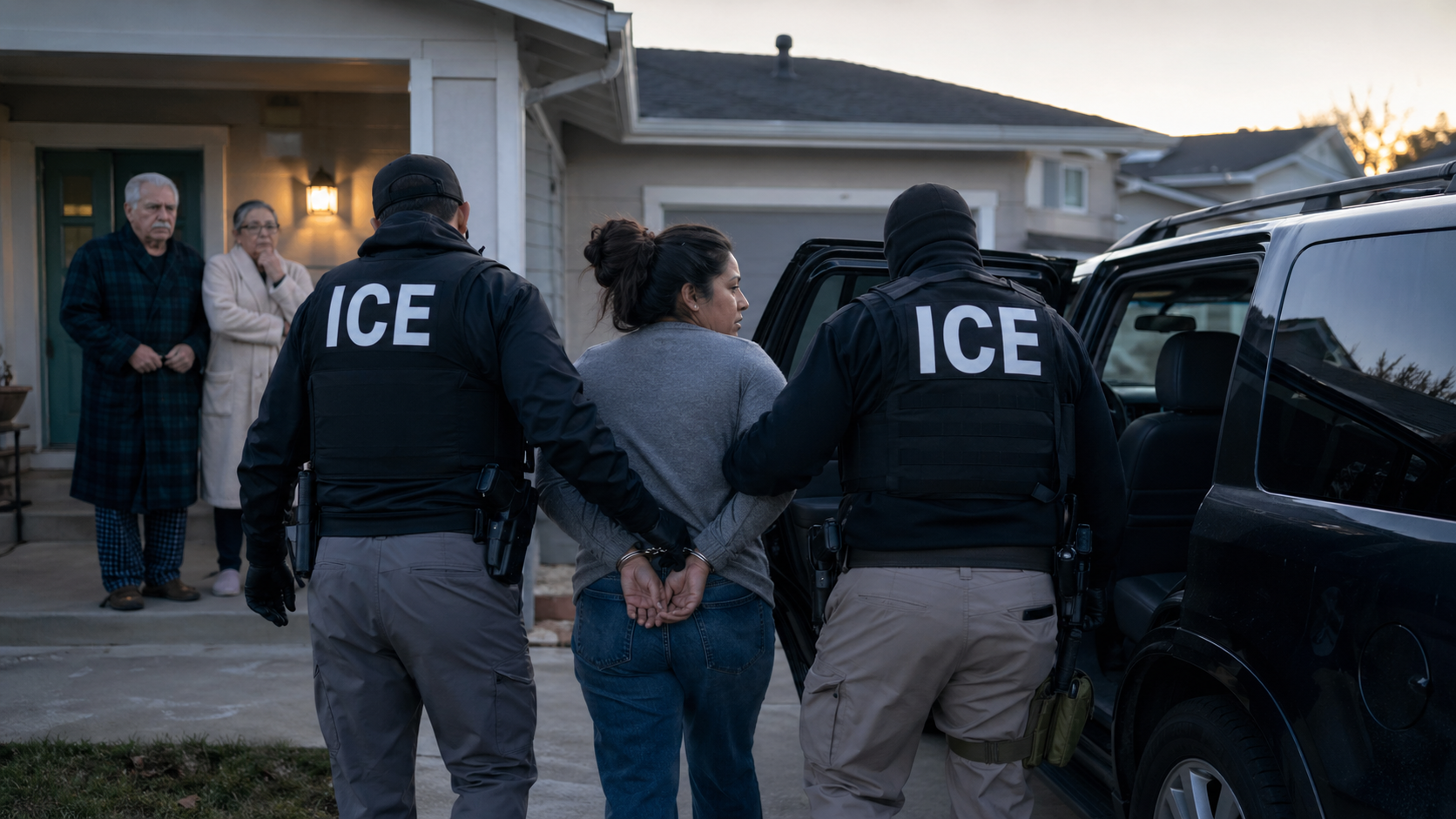
An ICE arrest at a suburban home in the early morning
Chapter One
The first hour after a loved one is detained, before the locator updates, before any phone call connects.
I · The Knock at the Door

It begins
before dawn.

An unfamiliar car. A pair of plainclothes officers. A son taken to work and never arriving. A husband who didn't come home from his immigration check-in. The first hour after a loved one is detained is the worst hour most families will ever face.

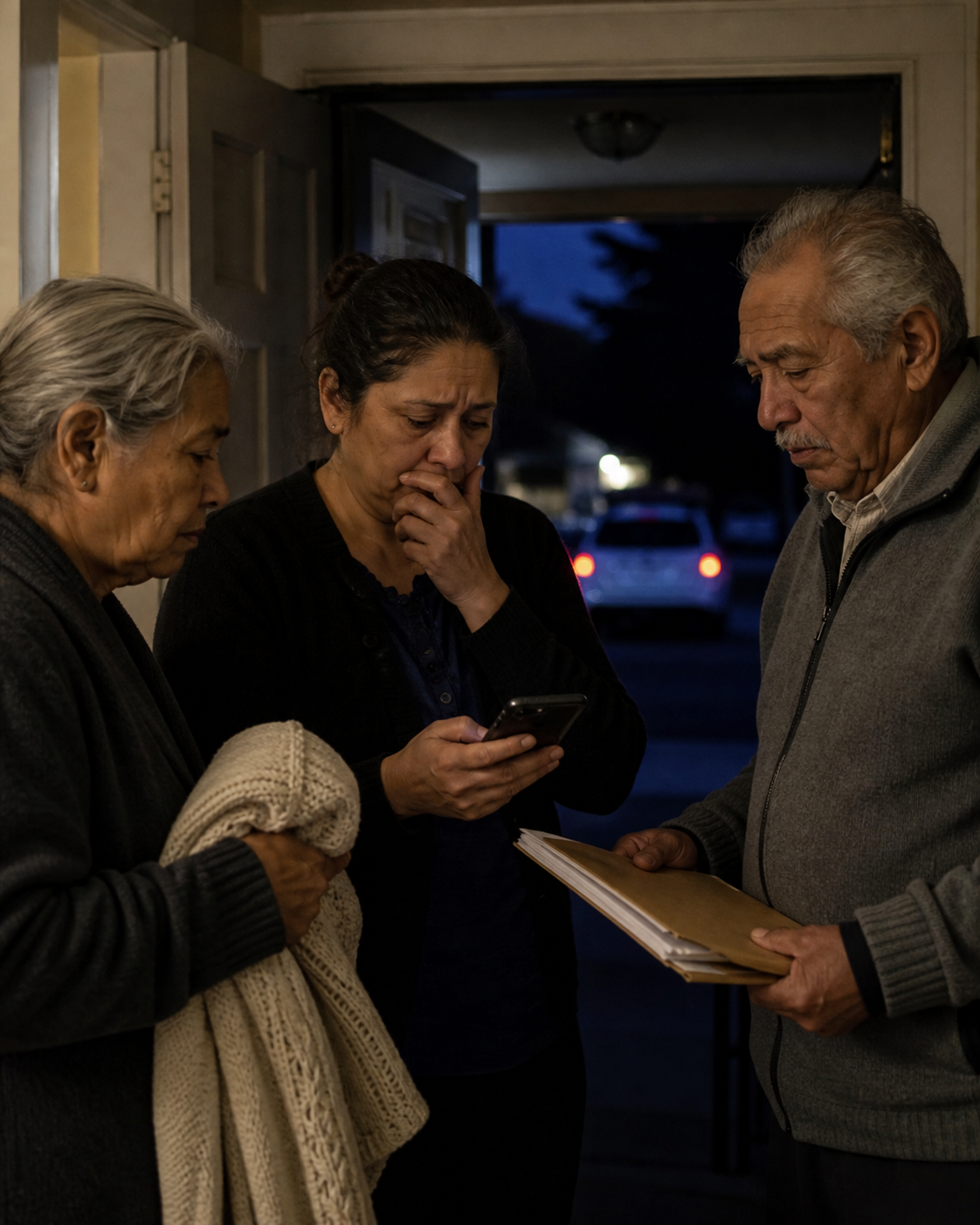
You don't know where they've been taken. You don't know if you can speak to them. You don't know what to do next, who to call, what is true and what is panic. This is when we pick up the phone.

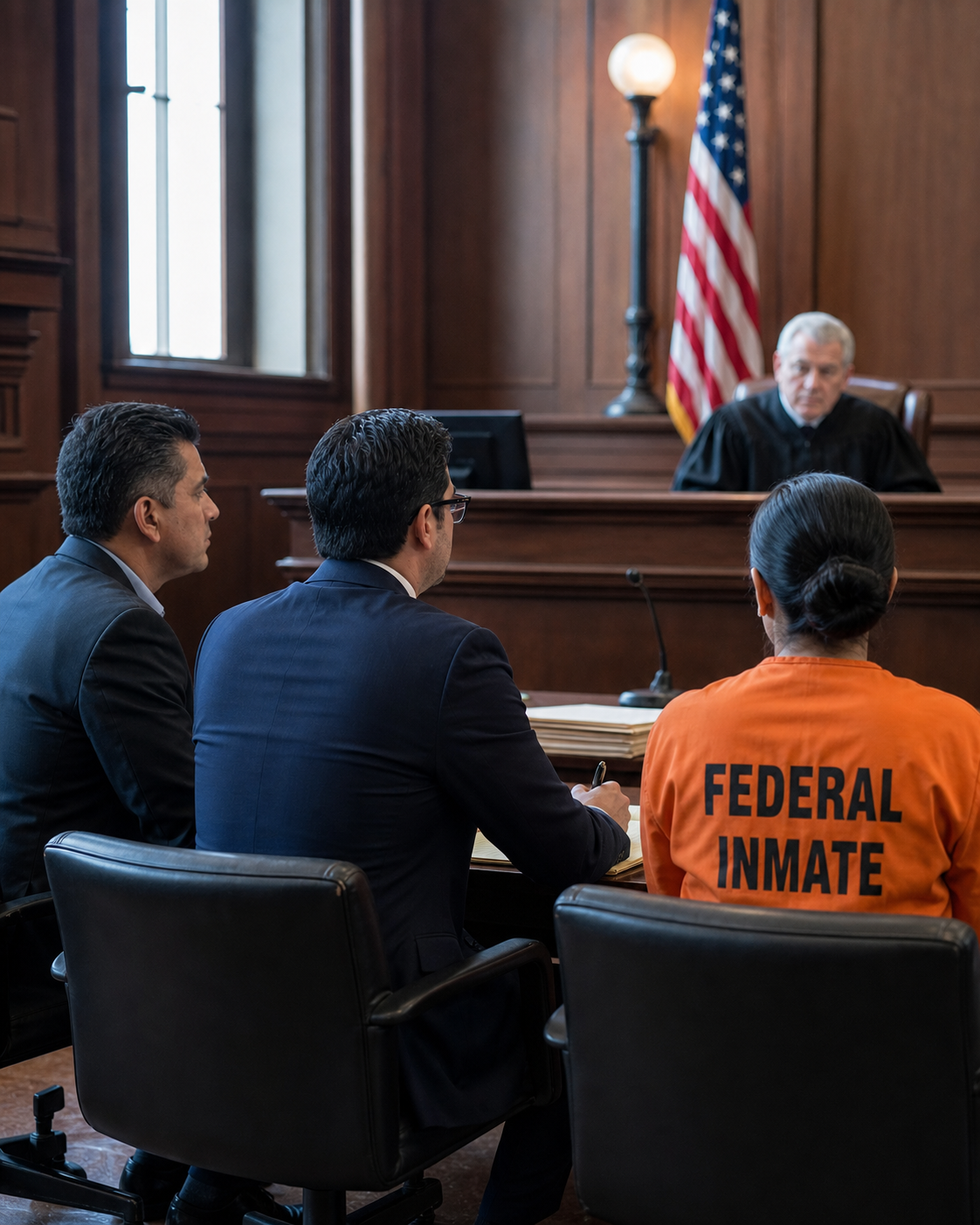
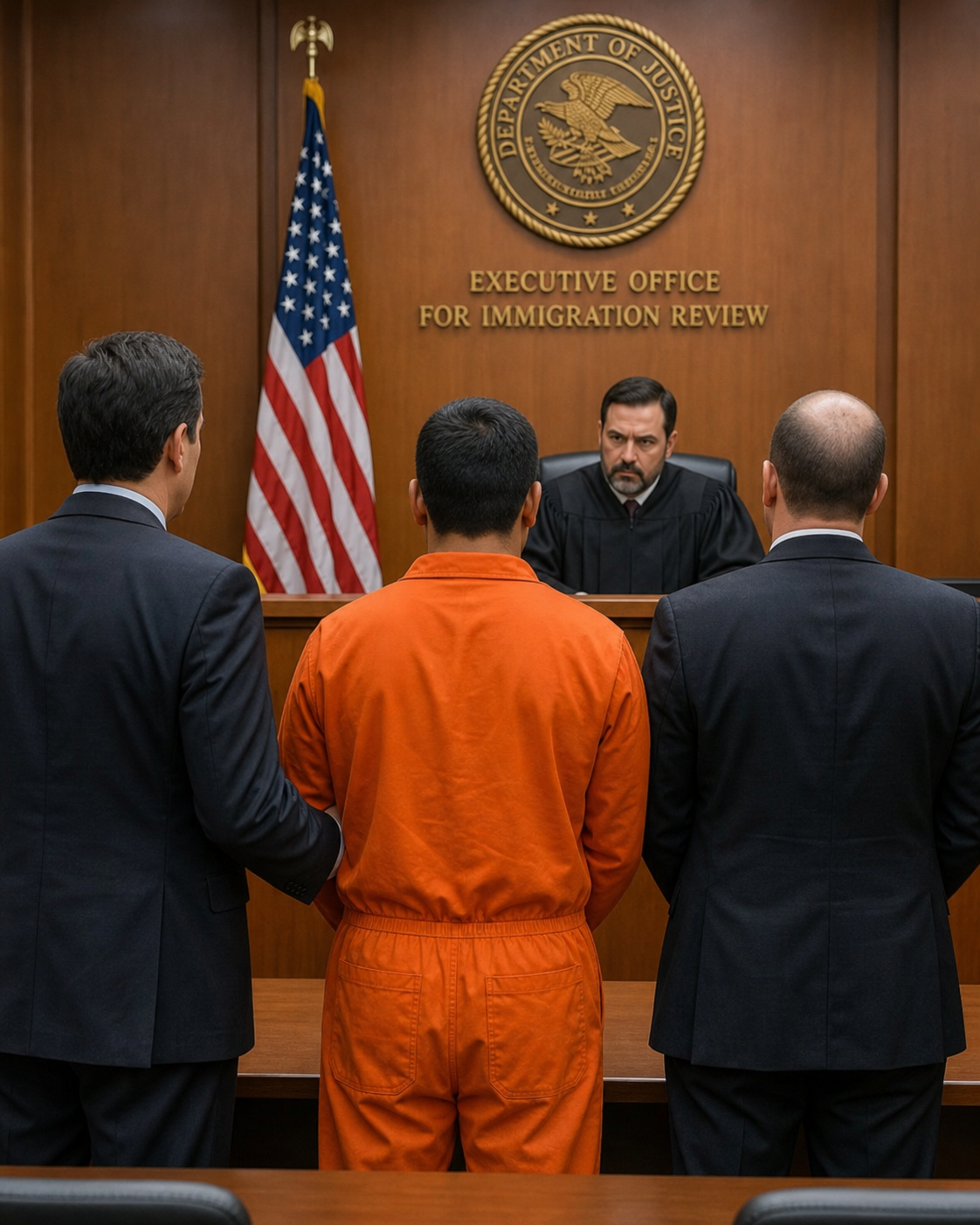
An immigration courtroom hearing with defendant and attorneys
Chapter Two
An immigration bond hearing can be brief. The preparation that goes in before it cannot.
II · Inside the Bond Hearing

What happens
at the courthouse.

Bond hearings are short. They are also the most important eight minutes of your loved one's case. The Immigration Judge weighs flight risk and danger to the community, and the family that walks in prepared walks out with a bond order.

We come with a complete sponsor packet: lease, paystubs, tax returns, letters from employers, declarations from family members, proof of community ties. We argue for the lowest possible bond and challenge every "no bond" designation by motion. Most families are told the wrong amount. We argue it down.

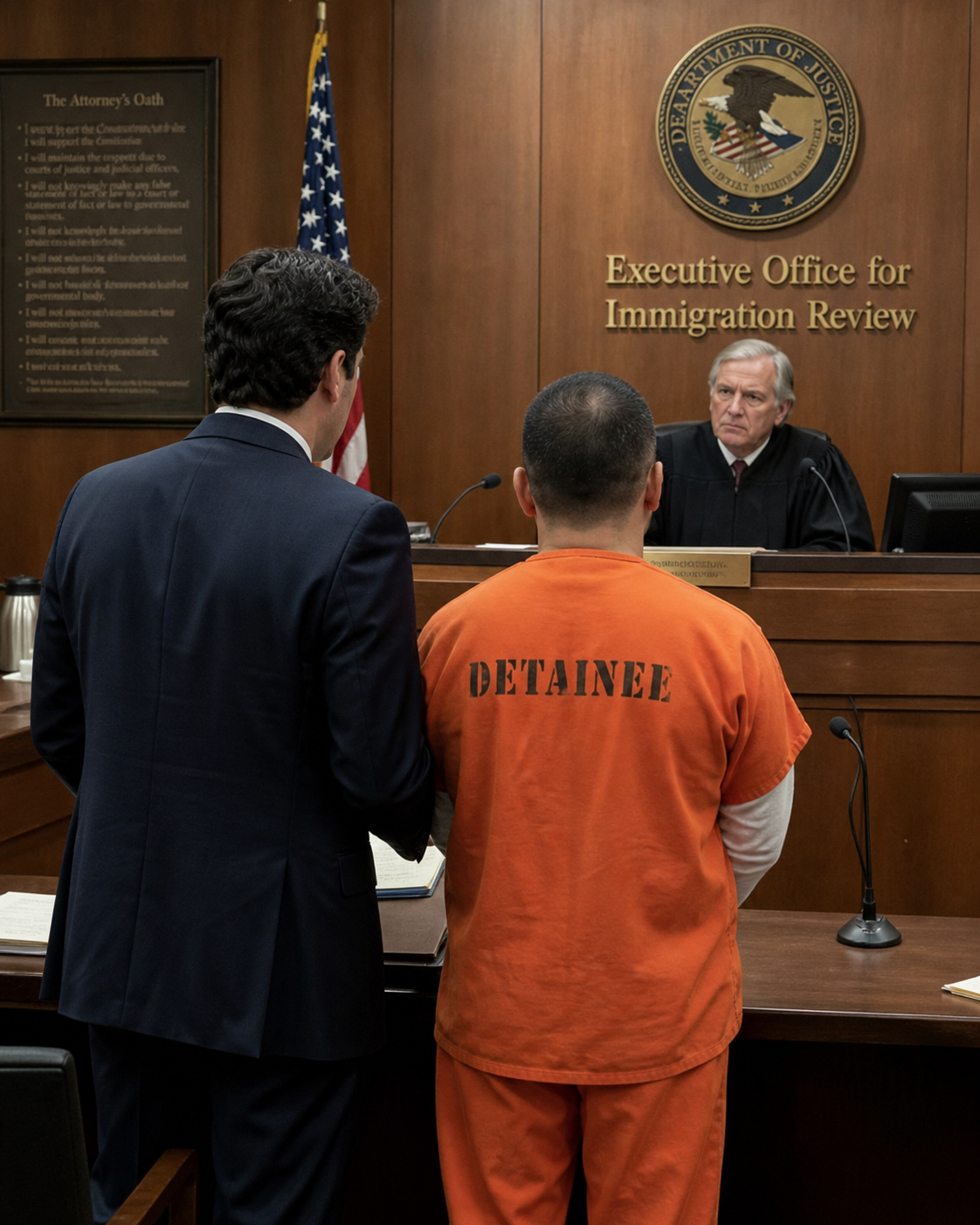
An immigration review courtroom proceeding
28 U.S.C. § 2241 · Federal District Court

If all else fails,
we file a Writ of
Habeas Corpus
in Federal Court.

Habeas corpus is a 600-year-old common-law remedy, older than the Constitution, older than the United States itself. It is the question every detained person has the right to ask of a federal judge: "By what authority do you hold me?" If the answer is unlawful, the judge orders release.

In the immigration context, the writ of habeas corpus under 28 U.S.C. § 2241 is the most powerful tool available to a noncitizen in custody. When the Immigration Judge denies bond, when ICE refuses to set one, when detention has dragged on past constitutional limits, the federal district court is where we go.

When We File / four scenarios

Prolonged mandatory detention.

Under 8 U.S.C. § 1226(c), some noncitizens are subject to mandatory detention with no statutory right to a bond hearing. But in Hechavarria v. Sessions and Velasco Lopez v. Decker, the Second Circuit held that prolonged mandatory detention, typically over six months, raises serious due process concerns and may compel a bond hearing as a matter of constitutional law.

Post‐removal‐order detention.

The Supreme Court held in Zadvydas v. Davis that post-removal-order detention beyond six months is presumptively unreasonable when there is no significant likelihood of removal in the reasonably foreseeable future. We file habeas; the judge orders release on an order of supervision.

Bond hearing burden of proof.

Under Velasco Lopez v. Decker, in the Second Circuit, the burden at a prolonged-detention bond hearing falls on the government, not the detainee, to prove by clear and convincing evidence that detention remains justified. We litigate this burden actively.

Where there is no other remedy.

When EOIR refuses jurisdiction, when an emergency stay is needed, when a Joseph hearing was wrongly denied, the federal courts are open. We file in the U.S. district court with jurisdiction over the place of confinement, often within hours of being retained.

No family
should spend a night apart.

This is why we fight.
The bond, explained plainly

When the Government is holding you,
we are the key to your freedom.

An immigration bond is the door between a holding cell and the dinner table. Understanding what is paid, where it goes, when it returns (and what to do when a judge says no) is half the fight.

An immigration bond is a financial promise made to the United States government: post this amount, and the person you love walks out of ICE custody and comes home with you while the immigration case continues. Show up to every hearing, every check-in, every ordered appearance, and at the close of the case the cash returns, with interest. Miss a single hearing without a lawful excuse, and the bond is forfeit. The money is gone. A warrant for arrest typically issues alongside it.

Deportation defense & detention, in our clients' words
He is a strong immigration trial attorney who fought hard in court and did everything he could to protect my son.
★★★★★Verified Avvo client · son’s immigration case
Mike is relentless in pursuing the most satisfactory resolution for your case no matter the obstacles. Over a decade with this firm, including immigration.
★★★★★Victor · Google review, long-term client
Mike helped me a lot with my immigration case. He was very intelligent, respectful, and quick to respond to the judge the day of my case.
★★★★★Nazario · courtroom representation

Bond is decided by an Immigration Judge in a hearing that often lasts fewer than fifteen minutes, sometimes with the family barred from the room. The judge weighs flight risk, danger to the community, community ties, criminal history, immigration history, and equities, on the record, on a moment's reading. The preparation that goes in before that record is built (sponsor declarations, employment letters, lease, school records for U.S.-citizen children, evidence of rehabilitation, medical documentation, the right Joseph argument where mandatory detention has been wrongly invoked) is the difference between a bond set at $1,500 and a bond set at $25,000, between release tonight and release in six months, between a bond at all and a denial that sends the case to federal court.

Here is the part that matters most: you get the money back. A cash bond is not a fee, and it is not a payment to us. It is a deposit the government holds while the case is open. As long as your loved one shows up to every court date, the full amount is returned at the end of the case, with a little interest added on top. We handle the paperwork and follow the refund through for you, so the money comes home too.

Below: how a cash bond works, how your family gets the money back and, when the judge says no, what we do next.

/01

Cash bond.

Posted directly with ICE. Held safely by the government. Returned to your family, with interest, when the case closes.

How it works

A family member or close friend who is a U.S. citizen or green-card holder posts the bond at the local ICE office. They bring a cashier’s check for the bond amount and a photo ID, ICE gives them a receipt, and your loved one is released, often within hours.

What we do

We are not a bail-bond company, and we never take a cut of your bond. Our job is the legal fight that gets the bond granted in the first place and set as low as possible, and then we walk your family through posting day, step by step.

Getting your money back

The bond is a deposit, not a payment. The government simply holds it while the case is open. As long as your loved one shows up to every court date, you get the full amount back when the case ends, plus a little interest on top. The refund usually arrives within a few weeks to a few months, and we handle all of that paperwork for you.

For example: a $7,500 bond posted for about two years comes back as roughly $7,950, the full $7,500 plus about $450 in interest.

Statutory minimum
$1,500
Median bond (U.S.)
~$6,000
Interest rate
3% / yr
Refund timeline
Weeks – months
/02

If bond is denied.

A no from the IJ is not the end: three live avenues remain.

A denial at the first hearing is the start of the fight, not the close of it. The structure of immigration practice gives every detained person more than one shot: an appeal, a redetermination on changed circumstances, and a federal habeas action when due process is at stake. We pursue the right one, sometimes all three in parallel.

  • Bond appeal to the BIA. Either party may appeal an IJ bond ruling. The detainee remains in custody during the appeal, but in stronger cases we seek expedited briefing and emergency stays. The removal case proceeds in parallel.
  • Subsequent bond redetermination. A second bond hearing before the IJ is available, but only on a written showing that circumstances have materially changed since the prior decision: new sponsor declarations, new health or hardship evidence, rehabilitation, criminal-history clarification, or a Joseph re-classification.
  • Federal habeas corpus § 2241. When detention drags past constitutional limits, when the IJ denial rested on legal error, or when no other remedy reaches, we file in U.S. district court. Velasco Lopez v. Decker (2d Cir. 2020) shifts the burden to the government at prolonged-detention bond hearings; Hechavarria compels a bond hearing past the six-month mark.
  • What we ask for in the rebuild. A larger sponsor packet, more letters of support, employment and tax records, lease, school records for U.S.-citizen children, medical documentation, and, where possible, a refined Joseph argument that strips the mandatory-detention basis altogether.
/03

Supervised release.

When ICE can release without a cash bond at all.

Cash is not the only key. Under 8 C.F.R. §§ 241.13 and 1236.1, ICE has discretion to release certain detainees on conditions, and we ask for it where the facts support it.

  • Order of Supervision (OSUP). Release to a fixed address with conditions: periodic in-person or telephonic check-ins with ICE-ERO, travel restrictions, and in some cases electronic monitoring (GPS ankle bracelet).
  • Alternatives to Detention (ATD / ISAP). ICE's Intensive Supervised Appearance Program: case management, telephonic reporting, GPS where assigned. The program runs roughly $4 per person per day, versus ~$150 to keep someone detained.
  • Humanitarian and public-interest parole. Discretionary release for medical conditions, family unity (especially U.S.-citizen-child caregivers), pregnancy, sole-provider status, or a compelling public interest. Filed with the ICE field-office director, often with medical records and family-impact declarations.
  • Mandatory Zadvydas release. After a final order of removal, if 180 days have passed and there is no significant likelihood of removal in the reasonably foreseeable future, ICE must release on an OSUP, absent danger or flight risk. We force this issue in writing.
A warm family embrace at golden hour after release
Chapter Three
After release, the work is logistical: meeting place, ride home, next-step calendar, the keys.
III · The Walk Home

And then,
they're home.

The moment the judge sets bond, our paralegal is on the phone with the family, walking them through the cash-bond posting requirements at the local ICE field office: ID, A-number, cashier's check, the I-352 form. The release plan is in motion before we leave the courtroom.

Most clients walk out the front door of the facility before the second sundown. We coordinate the release with the family: the meeting place, the ride, the documents, the next-step calendar. We hand them their case packet, their next hearing date, and the keys to their own house.

“Mikhail is an EXCELLENT LAWYER. He helped my husband with his immigration matter. Finally my husband is out the jail and he is going to get his green card. Thank you Mr. Usher you are the BEST.”

Alba Vivar, verified client review
Filings · petitions · hearings

Four paths home.

From the bond hearing to the federal courthouse, the work falls into four clear categories. Whatever's holding your loved one, one of these is the way out.

/ 01 · Win releaseEOIR · BIA · ICE-ERO

Get them out.

The bond fight: every motion, hearing, and appeal that ends with your loved one walking out the front door of the facility.

  • Bond hearing: argue for the lowest possible bond before the Immigration Judge
  • Joseph hearing: defeat the § 1226(c) mandatory-detention designation
  • Bond appeal (BIA): appeal a denial or excessive bond on an expedited timetable
  • Parole request (ICE-ERO): where bond is unavailable, parole may be
  • Custody review (POCR): for clients held past 90 days post-final-order
File →
/ 02 · Federal courtU.S.D.C.

When EOIR fails.

Federal district court is open even when EOIR is closed. We file when constitutional limits are crossed and a federal judge is the only path to release.

  • Habeas corpus § 2241: release or compelled bond hearing
  • Zadvydas petitions: six months past final order
  • Hechavarria & Velasco Lopez: prolonged mandatory detention (2d Cir.)
  • Burden-shifting at prolonged-detention bond hearings
Petition →
/ 03 · Halt removalBIA · CIRCUIT · USCIS

Stop the plane.

When deportation is imminent, hours matter. We halt removal and preserve every avenue of relief that's still open.

  • Emergency stay of removal: BIA and U.S. Courts of Appeals
  • Reasonable fear interview: gateway to withholding-only proceedings
  • Credible fear interview: survive expedited removal
  • IJ review of negative fear findings
Halt →
/ 04 · Posting & recoveryICE-ERO · DHS

Cash bond, posted right.

After the IJ sets bond, we make sure the cash bond is posted, refunded at the end, and protected from breach. We are not bondsmen. This is the legal walk-through.

  • Cash walk-in at the ICE field office: we come with you
  • I-352 packet preparation: ID, A-number, cashier's check
  • Bond refund recovery: Forms I-305 / I-391 at case close
  • Breach defense: contest forfeiture or seek reinstatement
Walk in →
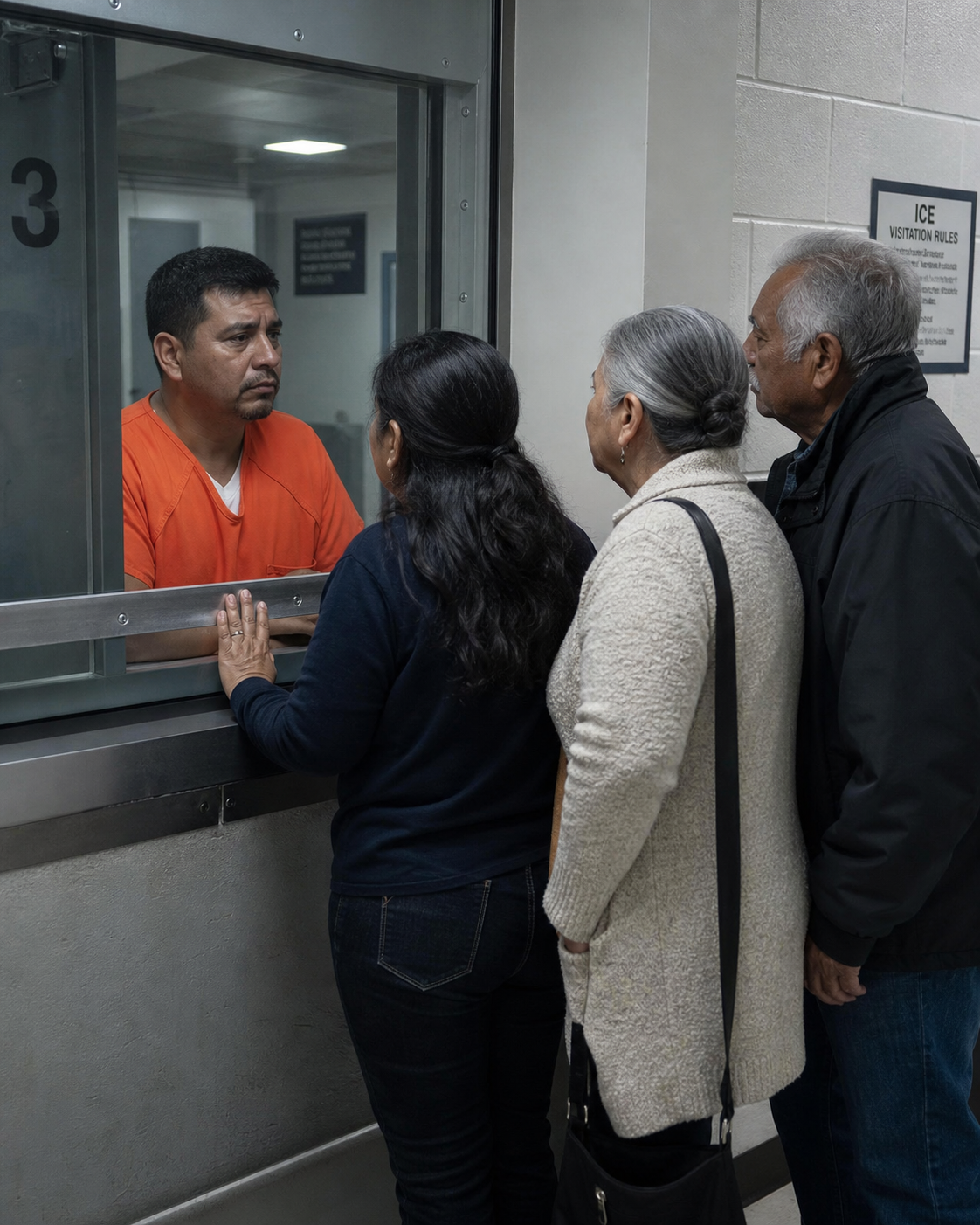
A detainee escorted to a detention center entrance
Field guide

Where they're held tonight.

ICE moves people. A husband detained in New Jersey may wake in Louisiana, then in Georgia by the weekend. Start with the official ICE locator below, then click any facility for procedures: how to confirm presence, deposit money, schedule a visit, and raise medical concerns.

Step One · Find them

ICE Online Detainee Locator

The official 24/7 system. Search by 9-digit A-Number + country of birth (fastest), or by full name + date of birth + country. Records can take up to 48 hours to appear after an arrest or transfer; check repeatedly during the first two days.

locator.ice.gov
The firm

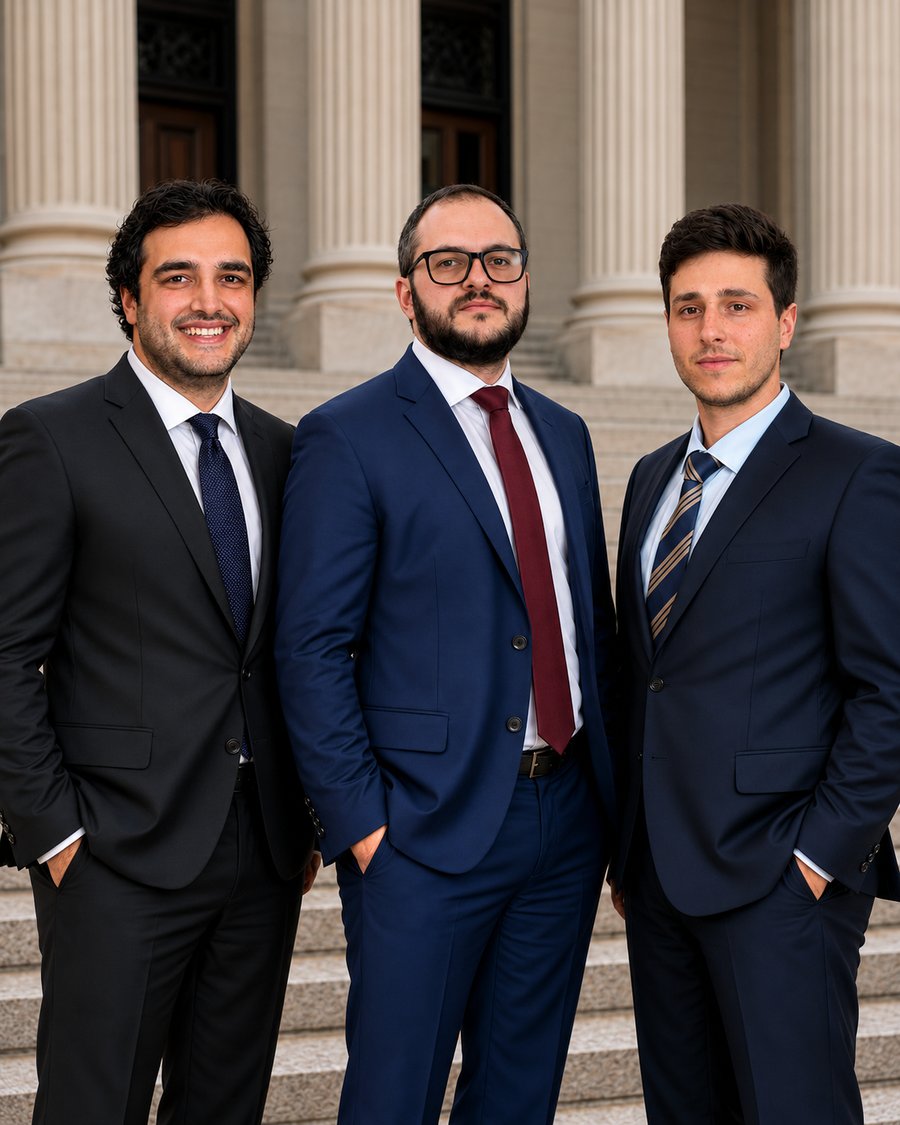
Three lawyers. One mission.

Usher Law Group is a Brooklyn-based immigration practice with a dedicated detention-defense team. We are not bondsmen. We are the lawyers who get the bond set in the first place.

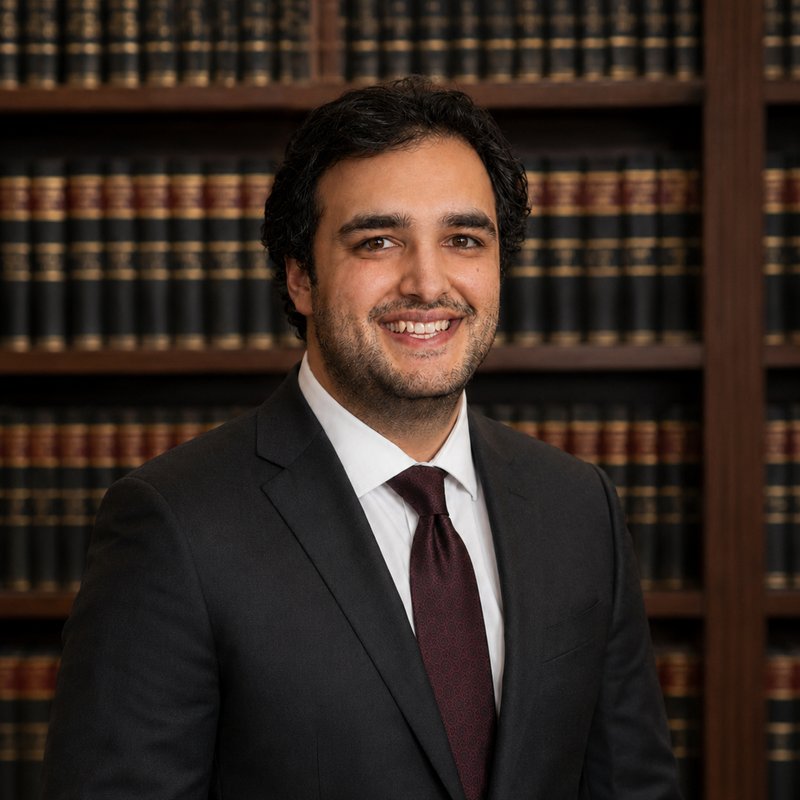
Mikhail Usher, Esq.
Managing Attorney
Mikhail Usher, Esq.

Mikhail Usher is the founder and senior partner of Usher Law Group. He earned a bachelor's degree in political science from Brooklyn College and went on to St. Thomas University School of Law in Miami, where he served as a senator in the Student Bar Association, competed on the school's national-champion mock trial team and earned high honors, and clerked for the Honorable Amy Steele Donner in Dade County, Florida. After passing the New York and New Jersey bars, he practiced immigration, criminal, employment, and consumer-protection law at a Brooklyn firm, where he built out the criminal division, and he later passed the Florida bar. He opened Usher Law Group about three years later and has led it since. He has been recognized by Super Lawyers as a Rising Star and later as a Super Lawyer, works with clients in English, Russian, and Spanish, and belongs to the American Immigration Lawyers Association, the American Bar Association, the New York County Lawyers Association, and the New York and New Jersey State Bar Associations.

State bar admissions
  • New York
  • New Jersey
  • Florida
Federal court admissions
  • U.S. District Courts for the Eastern, Southern & Northern Districts of New York
  • U.S. District Court for the District of New Jersey
  • U.S. District Courts for the Middle & Southern Districts of Florida
  • U.S. Court of Appeals for the First, Second & Third Circuits
  • Board of Immigration Appeals & Executive Office for Immigration Review (nationwide)
Alexander Susi, Esq.
Senior Associate Attorney
Alexander Susi, Esq.

Alexander Susi is a senior associate attorney at Usher Law Group. He studied history and political science at New York University and earned his Juris Doctor from Boston University School of Law, where he volunteered to help veterans and survivors of domestic violence obtain free legal services during the COVID-19 pandemic. Admitted in New York, New Jersey, and Pennsylvania, he carries a broad caseload: defending businesses against lenders and merchant cash-advance companies, negotiating debt settlements for consumers, and handling immigration matters that range from deportation defense to asylum. He also litigates civil and commercial disputes and drafts and reviews business contracts, from purchase-and-sale agreements and leases to employment and non-disclosure agreements.

State bar admissions
  • New York
  • New Jersey
  • Pennsylvania
Federal court admissions
  • U.S. District Courts for the Eastern & Southern Districts of New York
  • U.S. District Court for the District of New Jersey
  • U.S. District Court for the Middle District of Pennsylvania
  • U.S. Court of Appeals for the Second Circuit
  • Board of Immigration Appeals & Executive Office for Immigration Review (nationwide)
Mitchell Bromberg, Esq.
Associate Attorney
Mitchell Bromberg, Esq.

Mitchell Bromberg is an associate attorney at Usher Law Group. He earned his Juris Doctor from the Benjamin N. Cardozo School of Law and holds a bachelor's degree in political science. He is admitted to practice in New York and New Jersey. He concentrates on deportation defense for detained clients, bond proceedings, appeals to the Board of Immigration Appeals, and motions to reopen deportation orders. He has also worked extensively on ineffective assistance of counsel motions, marriage fraud/Stokes interview preparation, U-visas, family immigration, asylum petitions, citizenship applications, and the firm's debt-settlement and consumer-debt matters. He fights for his clients and never gives up.

State bar admissions
  • New York
  • New Jersey
Federal court admissions
  • U.S. District Court for the Eastern District of New York
  • U.S. District Court for the District of New Jersey
About the firm

Brooklyn-built, built to fight.

Usher Law Group P.C. is a Brooklyn law firm founded by Mikhail Usher after years of litigating immigration, criminal, and consumer cases. For more than a decade, the firm has represented immigrants and their families from its office on Sheepshead Bay Road.

A major part of the firm’s work involves detained immigration cases. When someone is arrested by ICE, denied bond, transferred far from home, or separated from family, every day matters. These cases involve people whose freedom, families, jobs, and futures are on the line.

Usher Law Group fights hard because freedom is often the most urgent issue in an immigration case. The firm brings more than 20 years of experience handling immigration bonds, custody redetermination hearings, bond appeals, motions to reopen, stays of removal, habeas petitions, and federal immigration litigation.

The firm prepares bond cases quickly and carefully, building the strongest possible record for release through family support, employment history, medical evidence, rehabilitation, community ties, immigration history, and legal arguments. If bond is denied or set too high, the firm does not simply stop there. It looks for the next step, including appeals, renewed bond requests, changed circumstances, and federal court options where appropriate.

Led by Mikhail Usher, the firm includes attorneys who handle immigration, criminal defense, family law, employment, commercial litigation, and debt defense. Its attorneys are admitted in New York, New Jersey, Pennsylvania, Florida, and multiple federal courts, including courts within the First, Second, and Third Circuits.

Because immigration court is a federal system, Usher Law Group represents detained clients in bond proceedings before immigration courts throughout the United States and its territories.

When the government detains someone, Usher Law Group’s goal is simple: act fast, fight hard, challenge unfair detention, and do everything the law allows to bring that person home.

The attorneys of Usher Law Group outside the courthouse
20+
years representing immigrant families
~200
five-star reviews on Google
Nationwide
immigration bond proceedings in every U.S. state and territory
12 languages
English, Russian, Spanish, Ukrainian, Uzbek, Farsi, Urdu, Hindi, Mandarin, Haitian Creole, Hebrew, and Georgian
In their words

From the families we brought home.

Excerpts from verified client reviews on Avvo and Google. The firm holds the Avvo Client’s Choice Award and ~200 five-star reviews on Google, built on detention, bond, removal-defense, and federal habeas work for hundreds of noncitizens and their families.

Bond & ReleaseAvvo · 5★
Mikhail is an excellent lawyer. He helped my husband with his immigration matter. Finally my husband is out of jail and he is going to get his green card. Thank you, Mr. Usher. You are the best.
★★★★★
Alba Vivar · spouse of a detained client
Deportation DefenseAvvo · 5★
He is a strong immigration trial attorney who fought hard in court and did everything he could to protect my son. During a very stressful and emotional time for our family, we felt supported and taken seriously.
★★★★★
Verified Avvo client · son’s immigration case
Before the Immigration JudgeAvvo · 5★
Mike helped me a lot with my immigration case. He was very intelligent, respectful, and quick to respond to the judge the day of my case. I could easily communicate with him at every step.
★★★★★
Nazario · immigration court hearing
Honesty & CareAvvo · 5★
Mr. Usher is the most honest and considerate lawyer I have known. He truly cares for the case and not just for the money. You won’t find lawyers like that anymore.
★★★★★
B. Nunez · verified Avvo review
He Showed Up in PersonAvvo · 5★
When the immigration court denied our request to appear online, he did not hesitate. He traveled from New York to Ohio to represent me in person, and in court he was exceptionally well-prepared. I felt protected, supported, and represented.
★★★★★
Nurillo Abdullajonov · immigration court hearing
There When It CountedAvvo · 5★
Mr. Usher was always there whenever I needed help during my case, and he explained every step clearly. His fee was very reasonable, and he set up a payment plan based on my situation.
★★★★★
Verified Avvo client · New York City
Questions families ask us

Answers in plain language.

In many cases, the same day. Once the Immigration Judge sets bond and the cash bond is posted at the local ICE field office, ICE typically releases within hours, sometimes the same shift, sometimes the next morning. Transfers, weekends, and holidays can delay release. We coordinate with the facility to make it happen as fast as is physically possible.
Bond amounts typically run from $1,500 (the statutory minimum) to $25,000 or more, depending on equities, criminal history, and the assigned judge. We argue every case for the lowest possible bond.
Often, no. ICE applies “mandatory detention” under 8 U.S.C. § 1226(c) more aggressively than the statute permits. We file a Joseph hearing to challenge the designation. In many cases the predicate offense does not actually trigger mandatory detention, and the judge restores bond eligibility. If the IJ refuses, we go to federal court under Hechavarria and Velasco Lopez.
A habeas petition under 28 U.S.C. § 2241 is a federal-court action that asks a U.S. district judge to order the government to release a detainee or grant a bond hearing. We file habeas when (1) detention has become prolonged without a bond hearing under the Constitution, (2) the post-removal-order period has exceeded six months under Zadvydas, (3) a Joseph hearing was wrongly denied, or (4) no other adequate remedy exists. The federal courts are open even when EOIR is closed.
No. We are an immigration law firm, not a bondsman. We do not post surety bonds and we do not take a premium against any bond. If a family chooses the surety route, they engage a licensed federal immigration bond company directly. Our work is the legal fight that gets the bond set, lowered, or restored in the first place, and the cash-bond walk-through at the ICE field office.
Government-issued ID for the obligor (who must have lawful immigration status), Social Security number, the detainee's A-number, a cashier's check or money order in the bond amount, and the I-352 form. We assemble the packet, walk the obligor through it, and accompany the family to the ICE field office for the posting.
Yes, when the case ends and all hearing obligations are met, the cash bond is returned to the obligor with interest. The refund process (Form I-305 / I-391) is paperwork-heavy and slow; we handle it on behalf of the obligor.
This is exactly the constitutional pressure point that habeas is designed for. Under Hechavarria v. Sessions in the Second Circuit, prolonged mandatory detention without a bond hearing, typically beyond six months, raises serious due process concerns and may compel a bond hearing. We file in federal district court and demand it.
Yes, in most cases. We discuss fees on the first call and structure them to the family's capacity. A free bond assessment commits you to nothing.
The view through bars to the horizon at sunrise

Don't wait. Call us tonight.

Every hour someone spends in ICE custody is an hour we cannot get back. The intake call is free. The assessment is honest. The decision is yours.

Request a free bond assessment